How the Cookie Crumbles

A Guide to Gaining Customer Insights in the Absence of Third-Party Data 

The future of third party data continues become more uncertain each day as governments and consumers worldwide are demanding more privacy online. In 2018, the EU passed the General Data Protection Regulation (GDPR) which dictates how personal data can be collected and shared amongst organizations of all sizes, requires disclosure on how the data will be used, and allows individuals to delete their personal data (EU, 2021).The United States has yet to pass a comprehensive federal law concerning consumer privacy, but states such as California, Colorado, and Virginia have passed their own (Klosowski, 2021). The California Consumer Privacy Act possessing the most strict protections, such as giving citizens the right to delete and opt out from the collection of personal information (Bonta, 2022). This legislative phenomenon is occurring in countries around the world, and failure to comply with privacy laws can result in severe fines and consequences for businesses—- resulting in great caution and hesitancy around third party data already. 

In 2019, Google announced their Privacy Sandbox initiative, which aims to eliminate all third-party cookies from the Chrome Browser by 2023 (Goel, 2021). A terrifying proposition as  Chrome possesses over 66% of market share for global desktop browsers (Vailshery, 2022). Safari and Mozilla Firefox announced similar initiatives for their browsers, and Apple and Android have created settings to allow customers to block all third party cookies on their mobile devices (Statt, 2020; Dussart, 2022).

The changing data landscape demands that businesses and organization find new sources of collecting consumer data for optimized and personalized digital marketing. However, one study shows that only a third of marketers recognize how the elimination of third party data will effect their business strategy (Sentance, 2020). A more recent study shows two-thirds of marketers presume that consumers will not choose an alternative based on privacy, and lastly 90%  believe consumers don’t read or comprehend privacy disclosures (CMO, 2022). Hesitancy to plan for a digital future without third-party data and adapt data collection to prioritize consumer privacy could lead to many businesses downfall. 

The Future is First Party Data

Currently, there are three types of data that can be collected from consumers: first, second, and third party. Traditionally, these three types of data are used in conjunction— allowing marketers to strategically find more target markets and create personalized advertisements (Robinson, 2021). Many businesses heavily rely on third-party data in their digital marketing strategy, but due to its unsteady future, businesses must pivot to prioritizing first party data. First party data is collected by a company directly from their consumers on their own platforms. For example, this data can be gathered from the company’s website, mobile application, or customer accounts. Since the company owns and directly sources the data, it is the most accurate and reliable form of data collection. Therefore, despite fear about a future without third party data, there is compelling potential in prioritizing first party data (Engelhart, 2021). 

Privacy, & Transparency

Enhancing first party data collection poses an exciting opportunity to benefit both the consumer and businesses. The first step in transitioning from an emphasis on third to first party data requires independence from browsers and cookies in creating a customer profile. To achieve this, a business must look at all the data they already have and discover what identifiers they are missing : who, what, where, why, and when (Long, 2022). Then create target segments from the existing first party data, find “lookalike” audiences, and begin collecting the needed first party data.

Consumers want to protect their privacy, but they also value transparency and personalized experiences. Studies show that 73% of consumers are willing to share personal information if  marketers respect their privacy by only collecting the data they need, and are explicit on how the data will be used (Williams, 2019). Additionally,  marketers should propose ways in which the shared personal information aids in customizing and improving  the customer experience. Forbes’ statistics reveal “83% of consumers are willing to share their data to create a more personalized experience” and “70% of consumers says a company’s understanding of their personal needs influences their loyalty” (Morgan, 2021). Establishing trust with consumers on the foundations of privacy and transparency is crucial to collecting first party data and gaining significant customer insights. 

Collecting First Party Data & Value Exchanges 

Since first party data must be sourced directly from consumers, implementing digital capabilities that connect and collect information from consumers in-store and online is vital. Marketers should also prioritize making the data collection experience user-centric and rewarding through value exchanges that make data sharing profitable and appealing for the individual (Latyala et al., 2022). 

One method includes registering customer accounts. Developing accurate and evolving customer profiles requires value exchanges without the customer lifecycle. However, this exchange must begin from the first touchpoint or purchase (Lewis, 2021). For example, offering first time clients $15 off if they create an account with your store. This collects valuable identifier data on the customers’ name, age, phone, email, and even address, but businesses must convince customers to continue interacting and purchasing through their brand account—collecting de-anonymized and detailed data on each customer action (Bahari et al., 2015). 

Accessing accounts online and in-store must be a frictionless sign in experience. Using tools like QR codes or Single-Sign On (SSO), which allow consumers to log in using their Facebook, Google, or Apple, eliminates the hassle of forgetting a username or password. If a customer uses guest checkout or creates another store profile, it threatens a potential loss in the quantity and quality of the first party data. Therefore, in addition to being user-friendly, consumers should be motivated to use their online account through convenience and rewards.

Convenience

To promote customer engagement, the accounts should create a more convenient shopping experience for the consumer while simultaneously collecting and storing first party consumer data.  For example, saving digital copies of receipts/purchase history, keeping forms of payment on file, or placing store products on hold. Account can also collect data on customers’ browsing in-store and online (Claravine, 2022). Online, data is collected through clicks, pages of the website visited, time viewing a product, abandoned carts, etc. In-store, a customer could login to their account via mobile app or website and begin creating a dressing room. Conveniently, the customer doesn’t have to search for their size or carry items around the store, and it collects vital  in-store browsing data. 

Value exchanges through rewards and customer loyalty programs also promote account usage, and allow marketers to consistently collect the most relevant and up to date first party data from consumers. The registered account rewards customers for making purchases through point or tier-systems, but can also reward their participation in sharing information. For example, after an online or in-store visit, customers could be sent a quick survey that if completed they receive a 15% off coupon on their next purchase. Additionally, the customer could customize their profile according to their interests, preferences, etc. to sign up for updates or sales on the items they love. Loyalty programs and rewards make customer feels valued and incentivize them to share information. (Lewis, 2021; Bahari et. Al, 2015)

Connecting Online 

In addition to online customer accounts, first party data can be collected from social media, customer reviews, and customer service inquiries. Social media allows companies to get more information on the demographics and psychographics of their current audience, and provides data on potential new target markets. By analyzing customer reviews and keeping detailed accounts of customer service inquiries/interactions, companies can collect valuable first party data on areas of improvement and success (Claravine, 2022). 

Leveraging Data

Regardless of the future of third party data, companies should prioritize first party data as their primary source for gaining insights on their customers. First party data is the most reliable, accurate, and applicable form of data for any company. By building trust with consumers through  privacy and transparency, data can be collected through value exchanges of convenience and rewards. The first party data collected can be leveraged to create personalized and improved products and services. 

References

Bahari, T. F., & Elayidom, M. S. (2015). An efficient CRM-data mining framework for the prediction of customer behaviour. Procedia computer science, 46, 725-731.

Bonta, R. (2022, March 28). California Consumer Privacy Act (CCPA). State of California – Department of Justice – Office of the Attorney General. Retrieved April 20, 2022, from https://www.oag.ca.gov/privacy/ccpa 

Dussart, S. (2022, February 17). Google Announces Privacy Sandbox for Android. Adjust. Retrieved April 20, 2022, from https://www.adjust.com/blog/google-announces-privacy-sandbox-for-android/ 

Claravine. (2022, February 17). Thank you: 22 ways to collect First Party Data. Claravine. Retrieved April 20, 2022, from https://www.claravine.com/thank-you-pages/thank-you-22-ways-to-collect-first-party-data/ 

CMO. (2022, February). The highlights and insights report February 2022. The CMO Survey. Retrieved April 20, 2022, from https://cmosurvey.org/wp-content/uploads/2022/02/The_CMO_Survey-Highlights_and_Insights_Report-February_2022.pdf 

Engelhart, M. (2021, July 30). Rethinking your customer data strategy without the third-party cookie. Tealium. Retrieved April 20, 2022, from https://tealium.com/blog/first-party-data/rethinking-your-customer-data-strategy-without-the-third-party-cookie/ 

EU. (2021, June 4). Data protection. European Commission . Retrieved April 20, 2022, from https://ec.europa.eu/info/law/law-topic/data-protection_en

Goel, V. (2021, June 24). An updated timeline for privacy sandbox milestones. Google. Retrieved April 20, 2022, from https://blog.google/products/chrome/updated-timeline-privacy-sandbox-milestones/ 

Klosowski, T. (2021, September 6). The State of Consumer Data Privacy Laws in the US (and why it matters). The New York Times. Retrieved April 20, 2022, from https://www.nytimes.com/wirecutter/blog/state-of-privacy-laws-in-us/ 

Latvala, L., Horn, J., & Bruno, B. (2022). Thriving in the age of privacy regulation: A first-party data strategy. Applied Marketing Analytics, 7(3), 211-220.

Lewis, A. (2021, August 12). Reimagining your data collection strategy: 5 tips to thrive in the Cookieless World. Tealium. Retrieved April 20, 2022, from https://tealium.com/blog/first-party-data/reimagining-your-data-collection-strategy-5-tips-to-thrive-in-the-cookieless-world/ 

Long, L. (2022). Effective first-party data collection in a privacy-first world. Applied Marketing Analytics, 7(3), 202-210.

Morgan, B. (2021, December 10). 50 stats showing the power of Personalization. Forbes. Retrieved April 20, 2022, from https://www.forbes.com/sites/blakemorgan/2020/02/18/50-stats-showing-the-power-of-personalization/?sh=5baf47392a94 

Robinson, A. (2021, April 12). Definitive guide to 1st VS 2ND VS 3rd Party Data – EP 5 – Identity Resolution Demystified. YouTube. Retrieved April 20, 2022, from https://www.youtube.com/watch?v=HFt5CwbUcIs 

Sentance, R. (2020, July 30). How well-prepared are marketers for the impact of the third-party cookie crackdown?Econsultancy. Retrieved April 20, 2022, from https://econsultancy.com/how-well-prepared-are-marketers-for-the-impact-of-the-third-party-cookie-crackdown/?MvBriefArticleId=23392 

Statt, N. (2020, March 24). Apple updates safari’s anti-tracking tech with full third-party cookie blocking. The Verge. Retrieved April 20, 2022, from https://www.theverge.com/2020/3/24/21192830/apple-safari-intelligent-tracking-privacy-full-third-party-cookie-blocking 

Vailshery, L. S. (2022, February 21). Desktop internet browser market share 2015-2021. Statista. Retrieved April 20, 2022, from https://www.statista.com/statistics/544400/market-share-of-internet-browsers-desktop/ 

Williams, R. (2019, October 17). Accenture: More consumers willing to share data when there’s transparency. Marketing Dive. Retrieved April 20, 2022, from https://www.marketingdive.com/news/accenture-more-consumers-willing-to-share-data-when-theres-transparency/565195/

Gotta Gloww

The SMU graduate making Dallas glow(w)

Whitney Kelly is known around the SMU campus as giving some of the best spray tans in Dallas. Now, after years of spray tanning students out of her laundry room, Kelly is moving into an official retail space in Lower Greenville. The new location will provide several new services, including clothing and blowouts, and her patrons will follow her there. But they’ll miss being greeted by the watermelon doormat to her apartment, and her German Shorthaired Pointer, Dylan

Whitney Kelly, the founder and owner of Gloww Tan
Photo courtesy of Kelly

Kelly, a 2006 SMU graduate, started Gloww Tanin 2013 after seeing the growing popularity of tanning. She saw new discoveries in natural spray tan solutions and technology, many of which were not being used in the Dallas area. 

“There were a lot of new developments in the industry, besides going to Palm Beach Tan, laying in the tanning beds, or getting a Mystic Tan. It was definitely becoming a bigger industry, and I thought I should become a part of it when it first started,” said Kelley.

Kelly masterfully applying spray tan solution onto a client. 
Photo courtesy of Kelly

Gloww Tan has become a favorite among SMU students by offering custom spray tans made from natural solutions, and not to mention the 20% student discount. To ensure the most natural color possible, Gloww Tan gives each customer an individualized analysis of their skin tone and under tones. Whether they’re looking to for a natural glow(w), or wanting to be dark bronzed goddess, Gloww Tan has it all. 

“If you have red or pink in your skin and you want to cover it up, then you’re going to want to use a color base that derives from a green undertone solution. That green base is going to create a brown coloring that will combat any red or pink,” said Kelly. “We do have a violet tone that is going to be more of a red-purple tone. I would use this one if you have more olive skin or want to be darker.” 

Julia Blanks, a SMU junior from Huntington Beach, CA first heard about Gloww Tan from other students and has been a customer for over a year now. Blanks said she tans at least once a month and before any major event, whether it be a formal or a game day.

 “I love Gloww Tan because of the consistency. Whitney has perfected her tanning solution and tailors each solution mix to match her customers’ needs. Since Gloww Tan does not use a machine, the spray tans are much more accurate and even,” said Blanks.

SMU students, Julia Blanks (right) and Brinley Cuddeback (left), both featuring tans from Gloww.
Photo Courtesy of Blanks

Business is booming, so Gloww Tan is moving out of the first floor of Kelly’s apartment, into a formal retail space. The new space will allow for more customers, services, and products.

“We will be contracting people in for hair and blowouts. We also will have pop-up make up shops, and an entire retail boutique with women’s clothing, accessories, jewelry, handbags, and athleisure wear,” said Kelly.

As she prepares for this expansion, Kelly is growing her team of professional tanners. Sonya Camarillorecently became an employee. Camarillo is training to perfect her skills through free tans to SMU students. 

“I started working for Whitney a month ago because I love tanning. It makes you look and feel your best,” said Camarillo. “It’s been so fun! My favorite thing has been meeting new people and giving them that perfect glow.”

Gloww Tan’s new retail space is expected to open in February 2020, near La La Land Kind Café in Lower Greenville.

Fashion and Feminism

Clothing as a reflection of changing values in society

Clothing is a visual expression of a society’s culture and values. When a society undergoes a revolution or change, there is usually a corresponding shift in clothing that either is a result of change, or a tool of creating change, according to Elif Kavakci of the SMU Fashion Media Department. 

This relationship is especially prevalent in women’s wear and its correlation with feminist movements throughout the history of the Western World. 

“Throughout history, social and political movements have been a part of fashion, and we can see that they have mutual benefits,” said Kavakci.

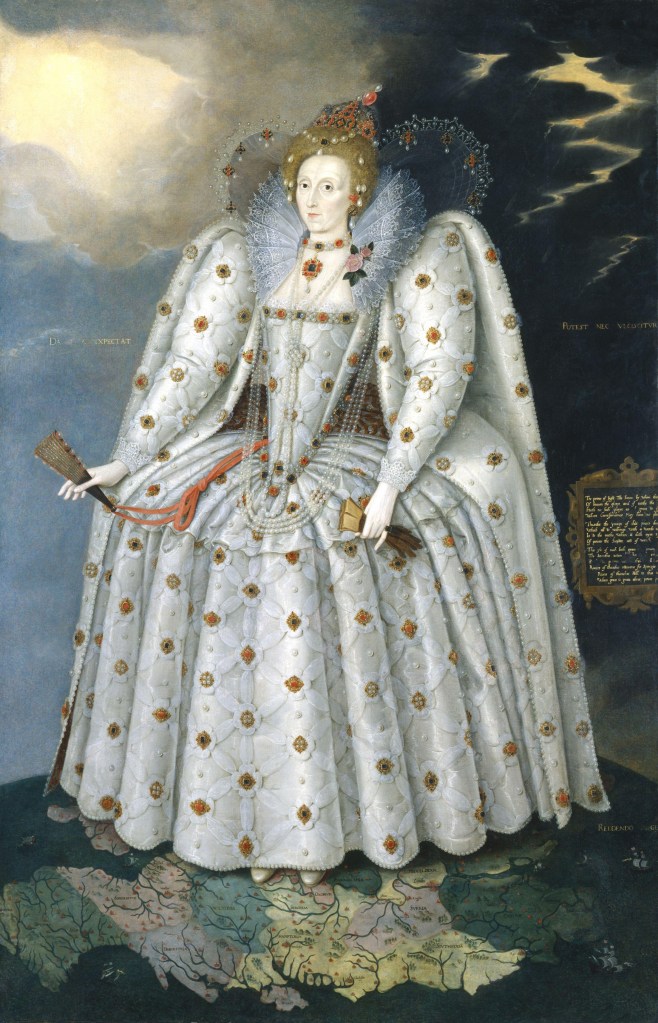
As Rome fell in 476 AD, Christianity rose to power. By the Middle Ages, all of Europe was united under the power of the Catholic Church. Women were often seen as subordinate to men and objectified as tools of sex and fertility. These beliefs were projected onto the clothing and beauty standards of the time, which idealized large hips as they were a sign of fertility and healthy birthing. To obtain a voluptuous silhouette, women began wearing farthingales, also known as hoop skirts, and corsets made from whale bone. These items were painful to wear and limited women’s range of motion, further supporting their inferiority. 

Photo of the young Queen Elizabeth I with an exaggerated and ideal silhouette. 
The Virgin Queen ruled England and Ireland from 1558-1603.
https://commons.wikimedia.org/wiki/File:Queen_Elizabeth_I_(%27The_Ditchley_portrait%27)_by_Marcus_Gheeraerts_the_Younger.jpg

While styles and trends changed throughout the Renaissance, the silhouette that emphasized large hips and small waists remained relatively the same. After the Industrial Revolution in the mid-19thcentury, the Victorian Era ushered in new possibilities for women. Despite not having the right to vote or to own property, women were able to join the work force and feminist ideas began to gain momentum. Although corsets were still firmly planted in womenswear, large bustles and crinoline skirts were abandoned by the late 19thcentury. This allowed women to have larger ranges of motions, and the ability to work in places like textile factories with some comfort. 

Portrait of Edwardian (late 19thcentury) women with the straighter silhouette. 
https://www.maxpixel.net/Pink-Edwardian-Women-Woman-Vintage-Dresses-Lady-1331476

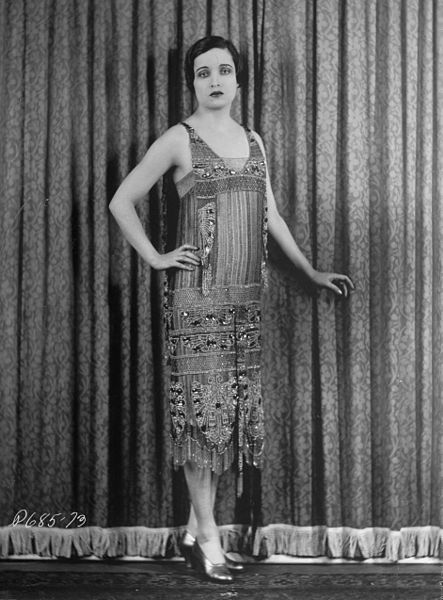
In early 20thcentury France, a young orphan girl climbed the ranks of society by dating French and English aristocrats. Gabrielle “Coco” Chanel was shocked by the impractical and uncomfortable attire of affluent women. Chanel started making clothes out of comfortable jersey fabrics, created the first little black dress, and scoffed at the idea of the corset. Despite being met with early criticism, her freeing designs complemented the first wave of feminism and women’s suffrage and soon became synonymous with liberating women from restrictive clothing. By the 1920s, hemlines shot up, hair was cut short, corsets were gone, silhouettes straightened, and women had the right to vote. 

Alice Joyce, a famous American actress from the 1910s and 1920s, pictured here in 1926.
https://commons.wikimedia.org/wiki/File:Alicejoyce1926full.jpg

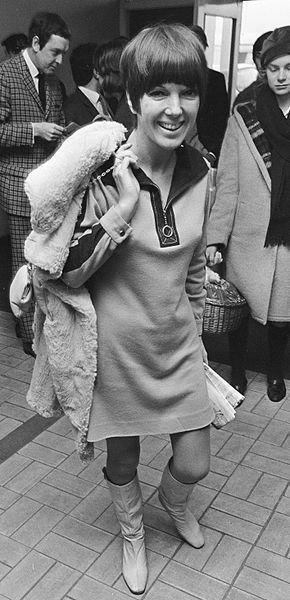
In the 1960s, a second wave of feminism sought to create more gender equality in other areas of life, including sexuality, reproductive rights, treatment in the workplace, and domestic violence. It was the beginning of the sexual revolution and birth control was easier to obtain. Coinciding with these structural changes, a London designer named Mary Quant invented the mini skirt. The mini skirt showed off lots of leg, and became a symbol of how women were beginning to take control of their own bodies and sexuality. Some women even burned their bras as a message of freedom from the patriarchy.

Mary Quant, London based designer and inventor of the mini skirt, in a mini dress, 1966.
https://commons.wikimedia.org/wiki/File:Mary_Quant_in_a_minidress_(1966).jpg

In the 1990s, a third wave of feminism, which continues today, criticized second-wave feminism for focusing on and being led by privileged white women. Third-wave feminism sought to unveil the layers of oppression by fighting for equal pay, body positivity, and rights for women of all races and socioeconomic class. 

Third-wave feminism created the breeding ground for a punk subculture called “riot grrl.” Often categorized as a music genre, the “riot grrl” movement also inspired rebellious fashion statements like shaved heads, unshaved armpits, and shirts objectifying men. 

            Kavacki believes that the power of fashion’s influence in politics is finally being acknowledged: “Nowadays, we have seen a lot of feminist messaging or political movements for women’s rights on the runway. Christian Dior is a brand that does that with the appointment of Maria Grazia Chiuri who is the first female creative director. The first collection that she did had T-shirts that said ‘The Future is Female’,” she said. “Fashion Week has become a platform for women’s rights on the runway.”

Young Journalism Entrepreneurs

How SMU students are navigating the industry’s new landscape

Does Journalism Have A Future,” headlines a New Yorkerarticle from earlier this year, and it’s a question many journalism students have considered at one point or another. Newsrooms have been laid off around the country, many of which were local newsrooms, according to the Washington Post.  However, “Newsgathering isn’t dying; instead, it’s becoming stratified, with real implications for our knowledge of the world,” said reporter Christopher Daly in an articlefor the Washington Post. 

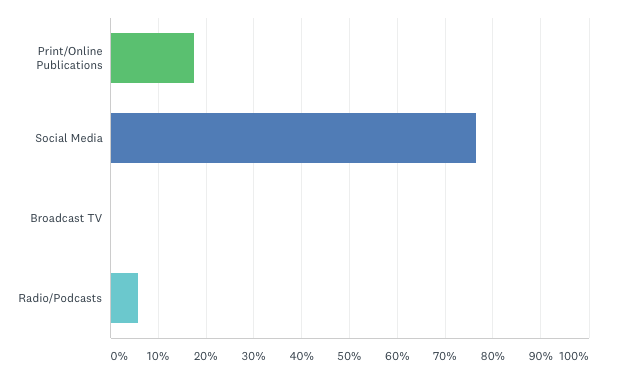
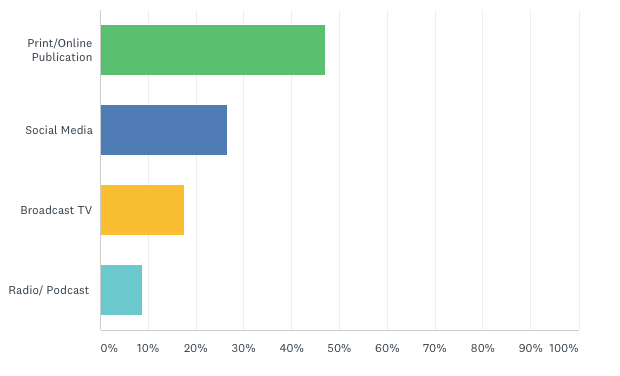
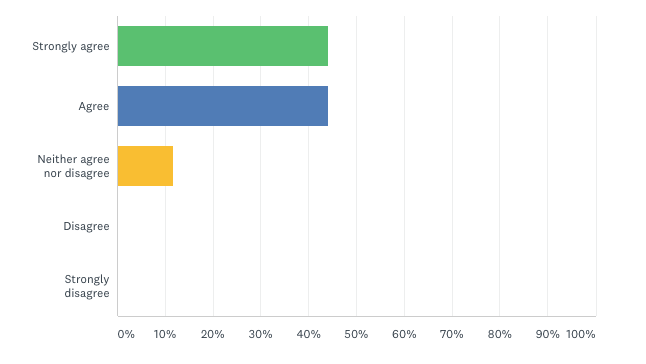
Social media platforms like Instagram and Twitter have substituted morning newspapers for many people under 35.  When 18-24 years olds get their news, 45% of them do so via smartphone, according to research from the Reuters Institute.  In a survey of nearly three dozen students from Southern Methodist University (SMU), over 75% of students said they consume most of their daily news from social media platforms. In addition, nearly 90% of students either agree or strongly agree that they like to be knowledgeable of current events.

How SMU Students Consume News Media 

Where do you consume the most news on a daily basis?

What is the second most common platform you use?

I consume news because I like to be knowledgeable of current events

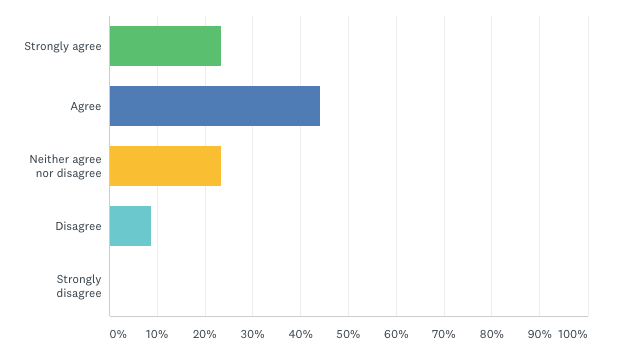
I think news is fun

Not only are we consuming news in different ways, but the definition of being a journalist is also changing. Anyone with a smartphone or computer has the ability to write and share their stories. Traditionally, journalists and publications were the mediators between news and the public. This is no longer the case. 

Professor Jake Batsellof the SMU Journalism Department, offers a class called “Media Entrepreneurship” which aims to help journalism students navigate this new landscape. One of the students in his spring 2019 class was Dana Giles

            Giles had created an online media platform called “I Want The Real” (IWTR) which sought to bring light to taboo topics effecting young people such as drug addiction and dealing family trauma. The site quickly gained traction as readers began flooding to the website. 

            “When I released it [IWTR], it kinda formed on its own. I felt like I didn’t necessarily do that much, but when people read it and heard about it, I felt like they were the catalysts,” she said. 

As a business major, Giles was unsure of how to direct this new hot spot she had created, so she enrolled in Batsell’s class. 

            “She pro-actively reached out to me before the semester started and said that she wanted to come up with a business plan for her website. We worked together in the early stages of the semester to build out her community,” said Batsell.  “She put together a business expansion plan for the Provost’s Big iDea’s Contest, and actually won a $5,000 grant to expand the audience.” 

Listen to an interview with Giles here

            Giles used her grant to purchase the equipment needed to start a podcast. The episodes interviewed people like a Dallas Cowboys Cheerleader, a SMU student who struggled with an eating disorder, and a lacrosse player who got involved with drug dealing. Giles graduated in May of 2019, and has decided to step away from IWTR at the moment due to the heavy nature of the topics discussed. However, she is just one of several other students on the SMU campus who are journalism entrepreneurs. 

            Belle Campbellis a SMU junior from Little Elm, TX majoring in fashion media and minoring in photography, advertising, graphic design, and arts entrepreneurship. After noticing a gap in the student media, she started her own magazine in the fall of 2018 called “The Green Book”. The magazine features articles about members of the black community at SMU.  

            “I try to use as many of their words as possible and really capture how unique each experience is, while also emphasizing the many similarities that tie us together as a community,” said Campbell. 

            At the moment, The Green Book is a fully funded publication thanks to financial aid received from Engaged Learning, Big iDeas, and the arts entrepreneurship program. After seeing the positive response from the community, Campbell is looking to revise her business model in order to make it more sustainable.

            “I do the interview legwork, I take the photos, I layout the magazine, I talk to the printers, I do it all. It’s the best way I’ve found to make sure the magazine stays true to the mission I’ve envisioned for it. But, I’ve got my eye on a couple of people in the SMU journalism department, so that could change soon,” she said. 

            Another group of SMU students also saw group of underrepresented voices on campus, and decided to begin their own publication. Temi George, a junior English major, is the co-founder and co-editor-in-chief of a magazine called Hugo, which started in the spring of 2019.

            “Our point is to give students, who don’t feel like they have a voice in on-campus publications as they stand now, a platform to be able to speak about things that they think matter. Also to give access to people who want to hear those voices,” said George.

            Hugo magazine aspires to promote diversity and inclusivity by capturing cultural moments and adding commentary to them. For example, one of their recent articles is a review of the Dallas Theater Center’s musical, “In The Heights.” The article discusses the significance of its Latinx representation and the work on Lin-Manuel. 

            For the moment, Hugo is the limited to online, however the staff would like to publish a printed publication as they continue to grow. Currently the magazine is being advertised only through word of mouth, but will soon begin engaging with their audience through social media. 

            A challenge Hugo has faced is adjusting from a staff of four to ten students. 

            “We are trying figure out how we fit everyone in, process articles, and what is the publishing process for us. Also, we know that we want to recruit in the future, so we know that we will keep expanding,” said George. 

            These young journalists are bringing light to people and subjects that are often neglected in the media. Perhaps journalism isn’t dying, rather the stories people want to read and hear are changing. Each one of these entrepreneurs have built their platforms based audiences with specific needs, like visibility and honesty. The future of journalism looks bright from where these publications stand. 

Karl Lagerfeld

A Man of Boundless Imagination

Karl Lagerfeld is a name that will forever go down in history as one of the greatest creative minds to ever live. He was a man of many talents and wore many hats as a creative director, fashion designer, photographer, and artist. Lagerfeld is best-known for his position as the creative director for several fashion houses. In the following essay, we will explore his impact on the houses of Chloé, Fendi, and Chanel. 

Early Life 

Before he was an icon with his white ponytails and large black sunglasses, Karl Lagerfeld was just a small boy from Germany. Even though he consistently lied about his age, it is believed that Lagerfeld was born in 1933 in the Hamburg district of Blankensee. 

From a young age, Lagerfeld proved to be talented and unique. He began drawing as a child, and had a passion for political caricatures. Lagerfeld also showed interest in fashion from the beginning. Unlike the other German boys, he had long hair, wore Austrian clothing and bow ties. Although he received criticism from his classmates, Lagerfeld refused to change himself for other people. He always believed he would one day be famous…maybe that was due in part to his strong sense of individual identity.[1]

Education and Training

Karl Lagerfeld claimed that he never received any kind of formal education. Rather, he said he self-trained his eye for beauty and art at Hamburg’s Kunsthalle Museum. Among his favorites were the paintings by Renoir, Manet, and Toulouse Lautrec. He fell in love with these French painters, which spawned into a love for everything French. In 1950, he attended the Christian Dior fashion show at the Hotel di Hamburg. Lagerfeld was mesmerized by Dior’s New Look, and he decided to move to Paris and become a fashion designer at age 17.  

Lagerfeld finished his secondary schooling at the Lycée Montaigne in Paris, where he majored in drawing and history. By the time Karl was 20 years old, he started working under the direction of Pierre Balmain and Jean Patou. Here, he perfected his skills in designing. In 1953, Lagerfeld won first place in a competition by the International Wool Secretariat for a coat design. Ironically, third place was given to another young designer named Yves Saint Laurent for his cocktail dress. Yves and Karl became lifelong friends and competitors from then on…

 In the early 1960s, Lagerfeld decided he wanted to move to Rome and study art history. While in Italy, he continued to work in the fashion industry by freelancing for major fashion houses like Chloé, Charles Jourdan, Krizia, and Valentino. By 1963, he was named the chief designer at Chloé.[2]

Chloé: 1963-1983 & 1992-1997

In 1952, the French fashion house Chloé was founded by Gaby Aghion. She was one of the first designers to create a luxury brand that offered ready-to-wear. Aghion named and modeled the brand after her friend who she thought “embodied the carefree attitude of the modern young woman at the time”.  Chloé aimed to turn away from the uptight and conventional ways of haute couture in the 1950s, and became a popular brand that symbolized youth and femininity.[3]

In 1963, Aghion hired Lagerfeld and several other young talented designers to work under her direction and carried out her vision. The team experienced immense success with their creation of iconic designs such as the shirt-dress and the silk blouse, which became classic pieces of the Chloé wardrobe and personality. After a year with the brand, Lagerfeld designed the Tertulia dress for Spring-Summer 1966. The dress’s “hand painted art nouveau-inspired motifs set the tone for Chloé’s elegant take on bohemian chic”.[4]

Throughout the rest of the decade, Chloé continued to flourish thanks to the prolific talents of Lagerfeld. With pieces such silk trousers, he promoted the idea of “relaxed elegance, and established the on-going tension between the feminine and masculine” which is became engrained in the Chloé attitude.

In 1974, Chloé is left solely in hands of Lagerfeld as he is made the one and only designer for the brand. The 1970s was characterized by his “soft and flou silk dresses, which celebrate a feminine and carefree romanticism with delicate lace inserts”. One of the most notable of this designs is the Rachmaninoff dress made of graphic and geometrical prints in black and white, paired with a scarf tied around the head. This dress exemplifies the romantic and bohemian tone of the Chloé brand that still exists today. [5]

Another iconic design by Lagerfeld in the 1970s was the cape. He debuted the design in 1974, but continued to reinvent it each season throughout the decade. For example, the cape would be made of silk for the Spring/Summer and wool for the Fall/Winter. Lagerfeld felt that cape expressed a certain sense of freedom with its fluidity of movement—allowing women to look feminine while having the comfortability of masculine clothing.[6]

In the 1980s, there is a new era of fashion with designs that are vibrant, and runways become parties. Karl joined in the exciting air of the time by finding much inspiration in music. He designed the infamous Angkor dress which features broad shoulders, bright colors, and a large violin embroidered on the front. Spring-Summer 1984 was the last show of Lagerfeld’s after two decades with the Chloé fashion house. The most notable design from this collection was the Ciseaux dress, which featured an embroidered scissor—symbolizing the end of his time as a designer for the brand. 

In 1992, Karl Lagerfeld returns to Chloé for a few years. During this time, he finds inspiration from several cultures, from classical to pop. He continues to create clothing that celebrates a “feminine and carefree romanticism”. 

In his Spring-Summer 1994 collection, he creates delicate and charming pieces. One of the notable garments was a sheer tulle dresses with hand-painted patterns inspired by the ancient frescoes of Santorini, Greece.[7]Two years later, Lagerfeld changed the tone of the brand with his Spring Summer 1996 collection.  He strayed away from his classically romantic and flowing designs, and transitions into a more playful attitude that coincides with the modern spirit of pop culture.  Karl said the collection featured “modern romanticism” which is translated through sexy silhouettes accompanied by copper tones and bright shades of yellow, orange, and pink. Lagerfeld’s new designs were “brought to life by the famous 1990s supermodels whose larger-than-life personas defined this era”.[8]In 1997, Karl is replaced by the fresh new- talent of Stella McCartney. 

Fendi: 1967-2019 

In 1925, the Fendi fashion house is founded in Rome by Adele and Edoardo Fendi. The store featured leather goods and a secret fur workshop. As the shop became successful, their five daughters started to get involved. The family business was full of bright energy and youthful ideas. In 1965, the overwhelming success caused the daughters to bring in the help of a young German designer, Karl Lagerfeld. Some like to say that Karl was the hand, and the sisters were the five fingers. One of Karl’s first developments for Fendi was the creation of one of the company’s first logos, the famous black and brown double F.

During the 1960s and 1970s, fur garments were become less desirable and becoming seen as “old-fashioned” and “bourgeois”. Lagerfeld sought to make fur accessible for women of all social classes and disassociate the garment from the luxury connotations. He began experimenting with tanning methods, weight, finishes, colors, and patterns. By 1966, he launched a colorful fur coat that was seen as scandalous, since previous fur garments had only been available in natural colors. This didn’t stop Lagerfeld from continuing to work with furs because in 1969, Fendi introduced a collection of fur garments that featured rabbit, mole, and squirrel… a first in high fashion![9]

Lagerfeld revolutionized the art of fur, both artistically and technically. He changed the manner in which fur was worn “by fully reinterpreting it, [and] transforming it into a fashionable, soft, light item of clothing”.[10]His fur garments had eclectic inspirations such Eskimos, medieval armor, Japanese kimonos, and modern technology. Today, Fendi is still the only brand to have an “in-house fur atelier”.

 Lagerfeld had a similar approach to designing leather goods. Just like fur, he sought to expand the manner in which the leather was treated in order to create “unusual colors” and “new designs”. Lagerfeld and one of the Fendi daughters collaborated to create the first “it bag”, also known as the infamous Baguette. As you may have already guessed by the name, the handbag was inspired by the shape of French bread. You may recall this bag from an episode of Sex and the City, or seen it on the arm of celebrities like Madonna, Julia Roberts, and Naomi Campbell. Over the years, the Baguette has been reinterpreted over 5,000 times in several different materials and styles, and continues to be a cult favorite today. 

 In 1977, Lagerfeld introduced a women’s ready-to-wear line known as “365- a dress for every day of the year, for a woman who wants her fur and purse to match her dress”. Accompanying the collection launch was a film called “Histoire d’Eau”. It was created by Karl and his friend Jacque de Bascher, and it’s considered the first fashion film ever.[11]The ready-to-wear collection succeeded and continued Fendi’s legacy of using fur in unique ways. Lagerfeld found ways of to combine fur with feathers, sequins, metals. His innovative designs were not the only thing that made his collections stand out. In 1993, Lagerfeld employed strippers and adult film stars to model a black and white collection he debuted at Milan Fashion Week. Anna Wintour was appalled by the show and walked out! Today, Fendi’s ready-to-wear has expanded in to menswear, shoes, eyewear, and fragrances. [12]

In 2015, Fendi branched out into the world of Haute Couture for the first time. Lagerfeld designed and presented his Haute Fourrure Collection in Paris. Once again, his designs: 

“explored the most extraordinary ways of working with rare and precious furs, combining it with elaborate embroideries and breath-taking techniques including the herringbone method of Gheronatura, and the introduction of new techniques including the silver fur effect.”[13]

In 2016, the second Haute Couture collection for Fendi was revealed in a unique fashion show. A clear catwalk was placed over the flowing waters of the iconic Trevi Fountain in Rome. Models appeared to be gliding over the top of the water while wearing enchanting gowns and furs.[14]

Karl Lagerfeld was creative director of the brand for 54 years until his recent passing in January 2019. His final collection for Fendi was debuted at Milan Fashion Week in February 2019.  To pay homage to the legendary designer, models sported high collars and low ponytails. Today, the iconic double F logo is now referred to as ‘Karligraphy’.[15]

Chanel: 1983-2019 

Karl Lagerfeld’s name is nearly synonymous with the brand Chanel, but it wasn’t always that way. In 1983, Chanel invited Lagerfeld to become its creative director. At the time, he was already juggling his role as creative director for both Chloé and Fendi. Fashion critics begged Karl not join the house of Chanel and claimed that the brand was dead and outdated. 

Fearlessly, Lagerfeld clapped back and said, “Chanel is the only couture house that I would be interested in updating. It’s the only one that could be modern. It’s a challenge. I like the idea.” [16]He then proceeded to exchange his position as creative director at Chloé for Chanel.

Gabrielle Chanel, also known as Coco, passed 10 years earlier. After her passing, the company focused on selling accessories and fragrances since those continued to bring in enough revenue to keep the brand afloat. Despite continuing to make couture lines, Chanel repeatedly seemed to be making copies of the late designer’s previous collections, with some minor changes. In addition, their ready-to-wear collections failed to make any kind of profit. [17]Thankfully, Karl saved Chanel from sinking. 

One of the first things Karl did was redefine and restructure the heritage of Gabrielle Chanel. Within the Chanel DNA, there is something called the “Chanel uniform”. The term was coined in the 1920s when Gabrielle revolutionized women’s fashion by creating a basic and practical wardrobe. Karl realized that many vintage Chanel pieces look contemporary because of their simplicity. He wanted to ensure that the brand maintained its classic and timeless aesthetic by creating guidelines for the brand to follow in each collection: tweed, little black dress, two-tone ballerina shoes, pearls, and the 2.55 double flap bag. Lagerfeld didn’t want to change Chanel, he wanted to radically modernize. 

Lagerfeld rejuvenated these basic pieces by pairing them with the unexpected—street culture. For example, he made grunge-styled garments from tweed. This combination proved to be a successful way to rebrand and revamp the brand. Karl famously said, “My job is not to do what she did, but what she would have done. The good thing about Chanel is it is an idea you can adapt to many things.”[18]

Another way Lagerfeld achieved this was by using the interlocked CC monogram in a myriad of ways. The monogram was originally created in the 1930s and used as a part of the clasp on handbags. Lagerfeld’s imagination transformed this symbol by making it a print for clothing, costume jewelry, and chain belts.[19]

Although you could endlessly discuss Lagerfeld’s ability to reinvent Chanel designs a million times over, he also managed to revive the Chanel runway through theatrical fashion shows. These elaborate spectacles costed a fortune, to which Lagerfeld replied, “For me, money is something you throw out the window, and then it comes back in through the door”. Primarily, these shows were done at the Grand Palais, but this Parisian monument would be nearly unrecognizable after Lagerfeld had transformed it into a stage for his collections. His boundless imagination resulted in several extravagant backdrops such as sandy beaches, snowy mountain chalets, cruise ships, and space ships. Some themes strived to mix the art of fashion with social and political statements. For example, one show featured a Chanel grocery store which was a commentary on Western consumerism, and another replicated a feminist protest in the streets in Paris. [20]

Thanks to Karl Lagerfeld, Chanel is considered a fashion powerhouse that leads the luxury fashion industry. After the passing of Chanel’s “Kaiser” (a nickname they for Karl), the brand has given the position of creative director to Virginie Viard, who worked closely with Lagerfeld for many years. In a public statement, Alain Wertheimer, the CEO of Chanel said: 

“Thanks to his creative genius, generosity and exceptional intuition, Karl Lagerfeld was ahead of his time, which widely contributed to the House of CHANEL’s success throughout the world. Today, not only have I lost a friend, but we have all lost an extraordinary creative mind to whom I gave carte blanche in the early 1980s to reinvent the brand.” [21]

Conclusion 

Karl Lagerfeld was a force to be reckoned with. His creativity and imagination knew no bounds. Over the course of half a century, Lagerfeld was an innovator in the fashion industry. For many, being the creative director of several fashion houses would have been too large of task. Karl’s ability to do this and consistently launch great collections was rare, and almost mythological. Despite being one man, he managed to compartmentalize each fashion house and create unique pieces that fit the personality and heritage of each house. Lagerfeld will impact several generations of fashion designers to come. 


[1]Biography.com Editors. “Karl Lagerfeld.” Biography.com, A&E Networks Television, 18 Apr. 2019, http://www.biography.com/fashion-designer/karl-lagerfeld.

[2]“About the Man.” Karl Lagerfeld, http://www.karl.com/experience/en/biography/.

[3]Fenn , Dominique. “The History of Chloé.” Globalblue, 27 Nov. 2014, http://www.globalblue.com/destinations/france/paris/the-history-of-chloe.

[4]“Maison Chloé.” Chloé Official Website, http://www.chloe.com/experience/us/maison/.

[5]Bumpus, Jessica. “The Forgotten Past Of Some Of Fashion’s Biggest Names.” Vogue, British Vogue, 6 Feb. 2019, http://www.vogue.co.uk/article/the-forgotten-past-of-fashions-biggest-names.

[6]Salter, Steve. “The Importance of Karl Largerfeld to Chloé.” I, VICE, 28 Feb. 2019, i-d.vice.com/en_us/article/59xjma/the-importance-of-karl-largerfeld-to-chloe.

[7]Grosso, Caroline. “French Fashion House Chloé Has a History of Turning Designers Into Superstars–Just Ask Karl Lagerfeld and Stella McCartney.” W Magazine, W Magazine, 17 Mar. 2017, http://www.wmagazine.com/gallery/chloe-fashion-designer-history/all.

[8]Fashion, 90S, director. Chloe Spring 1996 CollectionYouTube, YouTube, 10 Aug. 2015, http://www.youtube.com/watch?v=EnjZEuLbeb0.

[9]Reinach, Simona Segre. “Fendi.” LoveToKnow, LoveToKnow Corp, fashion-history.lovetoknow.com/fashion-clothing-industry/fashion-designers/fendi.

[10]“Fendi, High End Ready-to-Wear – Fashion & Leather Goods.” LVMH, LVMH, http://www.lvmh.com/houses/fashion-leather-goods/fendi/.

[11]Belverio, Glenn, et al. “Fendi in Rome, 1977. Apparently It’s the First Fashion Film in History. By Glenn Belverio.” A Shaded View on Fashion, 24 Dec. 2016, ashadedviewonfashion.com/2014/05/14/fendi-rome-1977-apparently-its-first-fashion-film-history-glenn-belverio/.

[12]Anderson, James, and Campbell Addy. “Everything You Ever Wanted to Know about Fendi.” I, VICE, 27 Apr. 2018, i-d.vice.com/en_us/article/qvxqpb/everything-you-ever-wanted-to-know-about-fendi.

[13]Judge, Lindsay. “The Textile History Of Fendi.” A&E Magazine, 11 Jan. 2018, aeworld.com/fashion/in-focus/the-textile-history-of-fendi-fur/.

[14]Martin, J.J. “Karl Lagerfeld Opens Up About His 50 Years with Fendi.” Harper’s BAZAAR, Harper’s BAZAAR, 5 Oct. 2017, http://www.harpersbazaar.com/fashion/designers/a17910/karl-lagerfeld-fendi-collaboration/.

[15]Style, SCMP, director. Karl Lagerfeld’s Last Fendi Show at Milan Fashion Week 2019YouTube, YouTube, 24 Feb. 2019, http://www.youtube.com/watch?v=-taLAcdSPyo.

[16]Weir, June. “THE DESIGNER WHO ‘DESTROYS THE PAST.’” The New York Times, The New York Times, 15 Aug. 1982, http://www.nytimes.com/1982/08/15/magazine/fashion-the-designer-who-destroys-the-past.html

[17]Stafyeva , Elena. “Why Chanel Would Cease to Exist Without Karl Lagerfeld .” Vintage Voyage, 22 Feb. 2019, vinvoy.com/blog/chanel-without-karl-lagerfeld/.

[18]Williams, Bre. “Karl Lagerfeld: How The Iconic Chanel Designer Changed The World of Fashion.” The Cheat Sheet, The Cheat Sheet, 19 Feb. 2019, http://www.cheatsheet.com/entertainment/karl-lagerfeld-how-the-iconic-chanel-designer-changed-the-world-of-fashion.html/.

[19]Andrew , Brittany. “How Karl Lagerfeld Saved Chanel.” Couture USA, 5 July 2016, coutureusa.com/blogs/news/how-karl-lagerfeld-saved-chanel/.

[20]Lang, Cady. “See Karl Lagerfeld’s Most Creative Chanel Fashion Shows.” Time, Time, 19 Feb. 2019, time.com/5532582/karl-lagerfeld-best-chanel-fashion-shows/

[21]Chanel Official . “Karl Lagerfeld.” CHANEL, 2019, http://www.chanel.com/us/fashion/karl-lagerfeld/.

Androgyny: Notes on Fashion

Androgynous fashion is tearing down the walls of a gendered society. 

Throughout history and still today, androgynous fashion is a force behind political movements and defining identity. Stories of cross-dressing have existed in nearly every culture since the beginning of time, but in the 1910s a woman named Gabrielle Chanel changed the game by giving women the gift of pants. For many, this is considered the birth of androgynous fashion. It wasn’t women in pants trying to be men, rather it was women wearing pants while still being women. Ironically, this coincided with the beginning of the Women’s Suffrage. For the next several decades, movie stars like Katherine Hepburn and designers like Yves Saint Laurent continued to push the envelope on women’s fashion. 

Despite the radical changes in acceptable women’s apparel, men experienced little no changes until the late 1960s. Known as the Peacock Revolution, this counter-culture movement was hailed in by David Bowie, Jimi Hendrix, and the Beatles. These music icons played with feminine silhouettes by wearing heeled boots, skinny jeans, and ruffled shirts. Men began to shake loose from the conforms of masculinity without questioning their sexuality. Perhaps no one did this better than the legendary Prince, who wore go-go boots and sequins while maintaining his image as a sex icon for women. In addition, the rebellious tone set by rock bands of the 1970s-80s inspired many men to sport pierced ears, eyeliner, painted nails, and long hair. 

In the grand scheme of things, the fashion leaps made by men were miniscule in comparison to those made by women. Dr. Myles Lascity, a journalism professor and the director of the Fashion Media program at SMU, believes that this is evident through the assumption that “if something is going to become unisex or gender neutral, it’s always the men’s side that takes precedent…It wasn’t ever the female garments, but now we have a trend of it going the other way,” he said. 

Lascity thinks the fluidity from the other direction (men to women’s garments) was largely started by Jaden Smith when he modeled for Louis Vuitton in a skirt. In spite of all this, he was quick to note that this trend may not get much traction:

“There’s a difference in what Jaden Smith is doing… this very sort of high end fashion as art element, on the red carpet and in advertising campaigns and what not, in comparison to everyday wear. There’s haute couture, and then there is what we are wearing… And we are moving towards athleisure wear and less formality. A skirt in general is a much more formal attire. It’s sort of sad to say, but if we are going to see unisex fashion, it’s going to be in the athleisure wear, and not necessarily guys in skirts,” Lascity said. 

Even though gender fluidity may only fit the formality of a runway or red-carpet, it has become more visible in the media and gives a voice to people who don’t conform to the social constructs of gender. For example, Fred Holston, identifies as non-binary and works for the Kim Dawson Modeling Agency in Dallas. One of the reasons they entered the fashion industry is because they were attracted to the nonverbal communication of identity that style provides. Unfortunately, displaying their true identity hasn’t always come easy:

“I can speak to my experiences as someone who was assigned male at birth adopting more feminine characteristics/presentation, and the ways in which that has created some potentially unsafe and uncomfortable situations for me. For example, in childhood—characteristics perceived as male manifesting in a young girl is often met with the endearing title of “tomboy”, but when femme characteristics manifest in children assigned male—there isn’t necessarily an equivalent terminology, and often this behavior is feared or discouraged,” Holston said. 

Thankfully there are people who want to change the way we wear, advertise, and talk about fashion.  Alessandro Michele, the creative director of Gucci, is spearheading this movement in the luxury fashion industry. In 2016, he decided to combine the men’s and women’s shows together—ditching the idea of separate, gendered collections. On any Gucci runway, you can expect to see men in dresses and sequins, and women in suits. Gucci also released a short fashion film called “The Future is Fluid” which features 13 young people from around the world to tell the story of how they are blurring the lines and redefining the world “through a prism of fluidity”. Gucci ambassador, Harry Styles, has become an icon for his gender fluid style and co-chaired the annual fashion event of the year, the Met Gala. 

The theme of the 2019 Met Gala was Camp, which is defined as the “love of the unnatural: of artifice and exaggeration” according to Susan Sontag’s 1964 essay. The origins of Camp date back to queer culture in the 17thcentury, and is often associated with androgyny and drag. “We’re experiencing a resurgence of camp not only in fashion, but in culture in general. Camp tends to come during times of cultural instability,” Andrew Bolton, the curator of The Costume Exhibit said. Fashion journalists and critics were quick to associate the theme as a response to the “age of toxic masculinity in Trump’s America.” 

The Camp theme inspired some of the world’s most honorable and recognizable men to cross countless gendered fashion boundaries for the event. Some of the most notable looks being: Billy Porter, Ezra Miller, Jared Leto, Hamish Bowles, Ryan Murphy, Alessandro Michele, Harry Styles and Darren Criss. As these men walked up the pink carpeted steps of the Met, they broke the traditional masculine molds by sporting sequins, fur capes, earrings, painted nails, heels, dresses, crowns, ruffles, and makeup. Despite the fact that Camp is supposed to be excessive and outrageous, these Met Gala looks will inspire us to view fashion in a different way. 

As society progresses, we can see a direct correlation between the rise of androgynous fashion and the acceptance of the LGBTQ+ community, particularly gender identification rights. Gender is a social construct that is many times reinforced through clothing. So what better way to fight the system than redefining it with its own weapons? Fashion is a tool of expression, experimentation, and celebration. If there is one thing we can learn from watching RuPaul’s Drag Race, it’s that the only things to be taken seriously in life are love and kindness. Therefore, everything else in life should be ridiculous, exciting, and hysterical, so were whatever you want. Clothing has no gender. 

Dialogue, Not Debate

Creating healthy discourse between Pro-Lifers and Pro-Choicers

The SMU Feminist Equality Movement (FEM) and Mustangs for Life collaborated to host “Dialogue, Not Debate” in which four panelists discussed the topic of abortion and women’s right in the Hughes Trigg Student Center.

The panel was composed of one SMU student and one expert on each side. On the pro-life side was SMU student and Mustangs for Life president Sean Doyle, and Kassi Marks J.D., an Attorney at Law at Leger Ketchum & Cohoon, PLLC. Marks specializes in protecting human rights at all stages of life, from conception to death. On the pro-choice side was Averie Bishop an SMU student and founder of “Get Sex Ed”, which is an evidence-based sexual education series on YouTube. She was accompanied by Rev. Dr. Daniel Kanter, Sr. Minister of the Unitarian of Dallas and a Board Member of Planned Parenthood of Greater Texas. 

Lamisa Mustafa, vice president of SMU FEM, organized this year’s panel.

“This is the SMU Feminist Equality Movement’s constructive response to the Mustangs for Life’s display on Dallas Hall Lawn. This is our third year doing this together, and we see this hopefully as a teachable moment for people to consider both sides of this very divisive issue… We think that this is a great way to show people that there is so much more to the issue than abortion,” Mustafa said.

The annual Dallas Hall lawn display by the Mustangs for Life. Each cross (~2,000) represents the number of abortions that happen everyday in the United States.

Going into the “Dialogue, Not Debate”, I lean pro-life, but I’m not a purist and have many exceptions. My roommate and I frequently discuss the issue of abortion. She’s a strong pro-choice advocate, and we’ve learned a lot from each other. Our respectful discussions are what inspired me to come to this event. I hoped to find more clarity and have a better understanding of both sides. 

The first part of the debate began by each panelist explaining why they hold the opinion they have. Each panelist had great answers, but the one that struck a chord with me was Averie Bishop’s. She explained how when she became sexual active, she wanted to get tested for STDs and STIs. After a google search, she found a women’s clinic. To her surprise, this clinic was not providing the kind of healthcare she needed. 

“I was taken into a backroom where a women came in with a Bible in her hand. She sat me down and began to quote the Bible to me. In that moment, I knew that I had found myself at a crisis pregnancy center… They’re centers that disguise themselves as clinics and often times they shame, lie, and mislead women in regards to reproductive health to dissuade them from abortions or accessing contraception,” said Bishop. 

As a woman who went to a Catholic school all my life, I had a lot of sympathy for her traumatic experience. The only sexual education taught to us was abstinence and natural family planning (lessons to be taken with a grain of salt when they are taught by a man with 5 kids and counting). Thankfully, many of my friends and I had access to adults who openly discussed it with us, but this didn’t mean we were safe from criticism from ours peers. Gossip about couples being intimate or things going down at last weekend’s party were frequently followed by hurtful names and comments. Because of these experiences, I understand Bishop’s frustration. One of the frequent pro-life arguments is that women can receive affordable healthcare from other clinics that don’t provide abortions. While this may be true, no one deserves to be shamed or have religion pushed upon them during a routine STD testing.

The panelists found middle ground in agreeing that we all want to decrease the number of abortions and increase access to sexual education. I was happy to hear this because I think there are common misconceptions of both sides that would say otherwise. For example, people who are pro-choice must love abortions, and people who are pro-life must not care about women’s reproductive healthcare. 

Kassi Marks on the pro-life panel actually experienced an unplanned pregnancy while she was still in law school. Although she found that her pregnancy was a blessing in disguise, she was scared and had six figures of student loans to pay off. For the reason, she hopes more women and men will take the time to educate themselves on reproductive health and fertility.

“Let me do a little commercial here for a book that I read… It’s called Fertility Awareness Method. It’s not natural family planning, it’s not based on a religious viewpoint, but it’s based on biology. And if you want to learn exactly how fertility works for women, when you can and cannot get pregnant, the cycle and how that works, complications in cycles… All those things based on science and biology with a neutral viewpoint in terms of faith and morality,” said Marks.

Out of everyone in the room, Rev. Dr. Daniel Kanter said he spends the most amount of time in abortion clinics. Kanter volunteers as a chaplan at Planned Parenthood and provides counseling for women and couples before abortions. He explained how he firsthand witnesses each unique experience and how many times it’s a difficult one: 

“I did a chaplan for an Evangelical couple who were pro-life, but they had to have an abortion because they had a fetal anomaly. The fetal anomaly was either going to hurt or kill the woman. They were in a desperate place,” Kanter said.

Kanter also explained that to him, life is defined by experience and therefore life begins at first breath. This was a different viewpoint that I hadn’t really heard before. I primarily heard pro-choice people believing that human life begins when the fetus is viable on its own, outside the womb. Personally, I try to keep my opinion on the beginning of human life consistent with the end of human life. When your heart stops beating, you die, so it seems logical to me that human life begins with the heartbeat, which begins to beat around 18-22 days after conception. 

One of the main points made by Sean Doyle on the pro-life side was creating a culture of life. 

“I have a consistent life ethic. I’m anti-war, anti-gun violence, anti-death penalty, anti-human trafficking, and I’m pro-life. I think those mesh really well. And ya know there are some pro-lifers out there who could do a better job of understanding that, but also the pro-choice side should understand that,” Doyle said. 

I agree with Doyle’s idea of a consistent life ethic, and that many times our society promotes a toxic culture. One of the largest reasons I lean pro-life is because I don’t believe a disability is reason enough to abort the child. Studies show that in recent years, 67-85% of unborn children diagnosed with Down syndrome are aborted in the United States. In other countries, it can be upwards of 90%. I think this is because our society, especially in eye of social media, is so focused on perfection. Although I acknowledge the fact that not all parents have the finances to provide for children with disabilities, I find those statistics too high for that to be the only scenario in which these abortions happen.

After leaving this event, I feel that I have strengthened my awareness and understanding of both sides. Although these panelists do not speak on the behalf of the pro-life or pro-choice movements as a whole, it’s so important to actually listen to people and their reasoning behind their beliefs. After all, a “marketplace of ideas” is what makes a great democratic society. No matter which side you’re on, remember that the way you feel and think is based on your own experiences. We must not judge or hate someone for their stance on any issue, because their experiences are what shaped a different perspective from your own.

I think we can all agree that we want women to be happy and safe, an increase in real sexual education, and a decrease in abortions. And remember, you get further with honey than you do vinegar, so be kind to each one another.

Link in Bio

Why millions are being spent on YouTuber Merch

On the third floor of Kathy Crow, Southern Methodist University sophomore Mackenzie Zimmermanopens up her closet to reveal an overflowing collection of YouTuber merchandise. The psychology and human rights major spends the majority of her screen time watching YouTube, not Netflix. Zimmerman’s habit began in seventh grade with Jenna Marbles’s comedy videos, but it has now grown into what she would call an addiction. So much so that it has caused her to spend a few hundred dollars on merchandise from her favorite YouTube content creators. 

Zimmerman in her dorm with her YouTube merch

However, Zimmerman’s collection is not an anomaly. YouTuber merchandise has planted a firm foot in the fashion scene, with collections selling out within hours of launching. Shopify, an e-commerce platform behind the websites of major brands like Yeezy, shut down Nov. 1 due to an overwhelming number of users trying to purchase the Jeffree Star x Shane Dawson collection. 

Star, a YouTube beauty guru, is also the owner of Killer Merch, the merchandise company behind the products of several YouTubers like Cody KoDanny Duncan, and Joey Graceffa. Star claimed in a recent docuseries called “The Beautiful World of Jeffree Star,” that the company is worth millions. 

Professor Elif Kavakci, a SMU fashion media professor, said the appeal of YouTuber merchandise is similar to that of concert merchandise because there is nothing special about the product, rather its appeal is in what it represents.

“In the day and age we live in, YouTubers have become celebrities in their own right. With millions of followers, they have fans who want to look like them, dress like them, talk like them. Thus any merchandise that reflects their favorite YouTuber becomes very significant for them,” said Kavakci. “People buy merchandise related to their favorite band, group, singer, actor/actress because they identify with him/her/them. They also want to show and express their love or adornment for the people they are fans of.”

Zimmerman says her YouTuber merchandise is “a symbol of my love” and that it connects her with others fans who want to “start a conversation about how they love them [YouTube stars] too.” But there are also some situations where she purchases the merchandise to encourage the creator to make future content.

“I bought all the David Dobrik merch because that’s how he makes majority of his money. He doesn’t make money off YouTube, so by buying his merch I am supporting him to keep creating.”

Mackenzie Zimmerman

Zack Kushubar, a SMU freshman dance major, is also an owner of YouTuber merchandise. Kushubar loves to watch beauty and fashion videos, and believes the YouTube merchandise is trendy because it caters to its audience and follows current athleisure trends. 

“I’m big into fashion so you know I’m looking at people like James Charles. Most of his audience is young girls between the ages 12 and16. They are wanting to wear lighter colors, pastels, and stuff that is trendy looking,” he said. “You can’t get more classic than like a plain hoodie with lettering on it. I really think he is trying to cater to people that way.” 

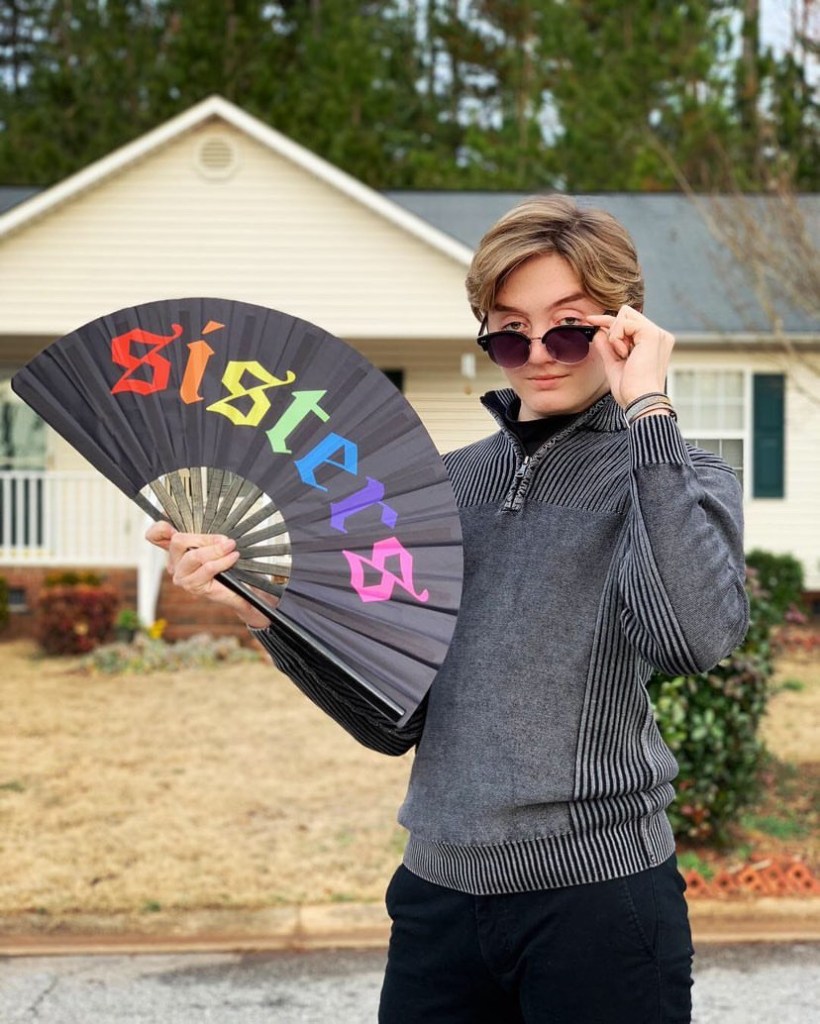
The style and font of the lettering on James Charles’s Sisters Apparel also bears a striking resemblance to Kanye West’s merchandise from Yeezy Season 3and The Life of Pablo. The products were launched in 2016, and dominated “the entire year of style and spur(red) countless ripoffs,” according to Complex. Although Charles has not admitted to copying or drawing inspiration from West’s designs, the similarities are evident.

While the products usually emulate current trends, YouTubers also seek to create products for their fans that align with their personal brand. Again, in the case of James Charles, he refers to his fan base as “sisters” and uses the word “sister” before any word that begins with “S.” Because of this, all of his merchandise is inked with the word “sister.” Some YouTubers are more subtle when implementing their personal brand. For example, Sarah Baska, a YouTuber who is known for her quirky sense of humor and spunky personality, has merchandise that has “ranch dressing” in Chinese written on the front. 

In addition to the style and branding of the products, people wear YouTuber merchandise as a sign of alliance. Within the past few years, social media platforms have developed what many people call “cancel culture.” The term refers to, “a modern internet phenomenon where a person is ejected from influence or fame by questionable action. It is caused by a critical mass of people who are quick to judge a slow to question,” according to Urban Dictionary

YouTube has experienced as number of feuds between content creators that have left fan bases divided. Some of the major fallouts include Jeffree Star v. Manny MUAJake Paulv. Alissa Violet, and the notable Tati Westbrook v. James Charles

Kushubar, who owns a James Charles limited edition rainbow hoodie, says he felt discouraged to wear it during Charles’s feud with Tati

“I used to wear it more, but after the whole scandal happened it’s like people would look at me,” he said. 

Kushubar with his limited edition rainbow fan from Sisters Apparel

Zimmerman says she is also imbued in the YouTube drama and that she wears her merchandise as a sign of union with her favorite creators. 

“Most girls keep up with the Kardashians, but I keep up with YouTube drama. My friends always text me when they have questions about it,” she said. “I actually cried when David Dobrik and Liza Koshy made the video about their break up because I’m that invested in the drama.”

YouTuber content creators are deeply connected to their audience, and their merchandise is a way to fortify that relationship. Basic clothing articles are given more meaning and even a sense a belonging. 

“There is a feeling you get when you wear it, that I don’t think you can get from an H&M hoodie,” said Kushubar. 

He. She. They. We.

Non-binary Pronouns Move into the Mainstream

Crowded around a desk one day recently in the Women’s and LGBTQ+ Center, a group of friends worked on homework and talked about the growing use of non-binary pronouns. One of the students, an SMU senior engineering major, prefers to go by the pronoun “they”. 

This student did not want their name used because they are not out about their gender identification to all of their friends and colleagues. But they shared some of their experiences on their gender identity journey. 

As a pre-teen, the student was an avid watcher of medical shows. They recall a particular episode, when doctors find that a female possesses the male chromosomes XY.

“If I was taken to a doctor and that actually happened to me, I would love that,” the student said. “And I just realized that’s not the normal experience.” 

This student is not alone. People around the world, including celebrities like singer Sam Smithand Netflix star Jonathan Van Ness, are identifying with a non-binary gender. Deviating from the black and white terms of he or she, these individuals prefer the pronoun “they”. 

The Merriam-Webster dictionary recently added “they” as a singular pronoun, and schools and workplaces are incorporating new practices that foster inclusivity for people across the gender spectrum. 

Professor Anne Lincoln of the SMU Sociology Department teaches a class called the Sociology of Gender. She said that most people are taught, starting at birth, to identify as a male or female based on their biological sex. Yet there are some people who don’t feel confined to the gender roles of their sex and want to have to choose between one or the other. 

“Gender is how we present ourselves as masculine and feminine, not only in appearance, but also in terms of behaviors and how people respond to us, as masculine or feminine,” she said.

Wren Lee, an SMU sophomore pre-majoring in creative computation, film/media arts, and human rights, also uses the pronoun “they”. Lee identifies as agender, meaning neither male or female. They are still trying to find a balance between their gender expression and gender identity. 

Lee accepts both masculine and feminine clothing, and likes to be both “dapper” and “cute”. They said that non-binary is used as an umbrella term, under which many sub-identities fall. 

“Non-binary is anything outside of the traditional male-female binary, so within that you can get a lot of different things,” Lee said. “You can have people who are two-spirit, which is a very Native American cultural thing. You can also have people who identify as gender queer, and gender nonconforming. In general, with gender queer, one day they might feel more masculine, more feminine, or maybe in the middle. They move through the spectrum. Then there are people like me who are agender.”

Professor Richard Bozorth, a member of the SMU English Department who specializes in Lesbian/Gay Studies, said that in the past, he would tell students in his writing classes that using they/them in reference to a singular noun is an error in pronoun reference. But with the increasing visibility of non-binary and transgender people across society, Bozorth said he has changed his views. 

         “The fact is that for centuries, going back 700 years at least, forms of they and them have been used in gender neutral, singular ways. Their sense of grammar was not governed by an obsession with the correct correlation between singular or plural nouns,” he said. “Adhering to such rules at the expense of the desires and wishes of how people want to be represented is inhumane and wrong.”

         In Colorado, the Boulder Valley School District created a policy that requires schools to develop practices that are sensitive to students with non-binary and transgender identities. Jen Dauzvardis is the Communications Director Peak to Peak, a K-12 school. Dauzvardis said in a phone interview that Peak to Peak began building gender neutral restrooms around three years ago, and pronoun introductions soon followed. 

“We allowed the students to identify their own pronouns as part of their introduction in the first week of school,” she said. “That’s a pretty high pressure situation, and not all students were prepared for that. It became clear pretty quickly that wasn’t the safest way to do it, and we have changed our practices since then. It’s no longer the expectation in the classroom, but there is always a space for a student to do so, if they choose.”

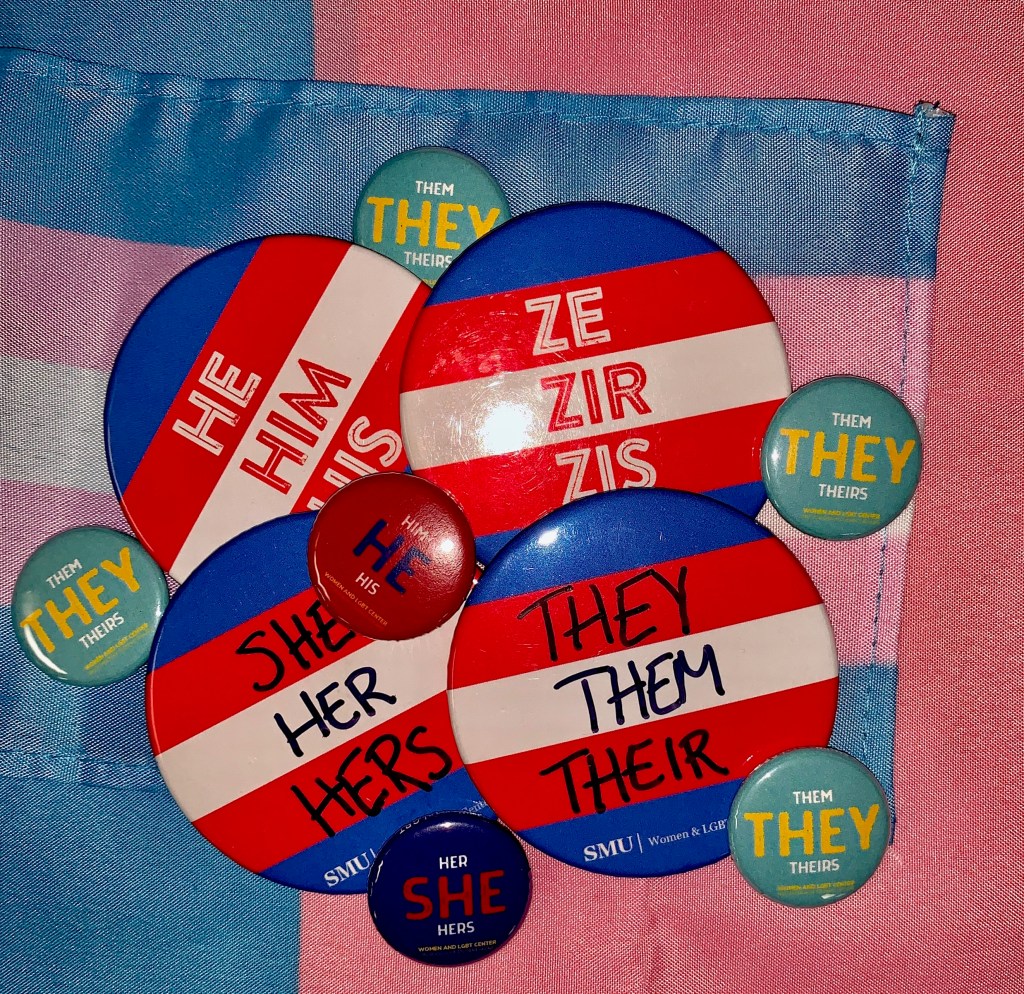
At SMU, some gender inclusive practices are carried out in certain spaces and by faculty members. For example, an annual event called Drag Bingo was recently hosted in Hughes-Trigg. It featured performances by drag queens, who have played a historical role in bending gender identity.  The event also gave students pins stating their preferred pronouns when they arrived. 

Pronouns pins available in the SMU LGBTQ center

Sidney Gardner, the director of the Women’s and LGBTQ+ Center, offers ally training that empowers teachers and students to become better advocates and friends of the LGBTQ+ community. The center also provides ally stickers for the doors of offices and dorms, which let students know that they are in a safe space. 

Lee, the agender student, said they had two experiences with SMU faculty that made them feel accepted and comfortable. Kevin Heffernan, a film professor, saw Lee’s preferred pronouns in their email signature. Heffernan reached out and asked Lee if he could refer to them by their preferred pronouns during class. Lee’s second, and favorite experience was with Joy Saunders, a Spanish professor. 

“I was in the Spanish I’m in right now. My professor picked up on it, because it was in my e-mail signature again. She asked me, ‘How do you want me to refer to you in Spanish?’ Because in Spanish, gender is male or female, there’s not really an in-between,” they said. “It was funny when she asked me that because I don’t actually know! I flip flop back a forth, so I told her to just refer to me as whatever you want in the moment.”

Lee said they wished they had more experiences like this on campus, because they are frequently misgendered. They said small actions, like wearing a pronoun pin or putting your pronoun in your email signature, can help someone feel more comfortable to be out about their own gender identity. Lee hopes students will join their campaign of queer advocacy and education. 

“Just explore. Maybe these aren’t my identities, but these are people’s identities,” they said. “When you use the correct pronouns, it means the world to people like me. You feel acknowledged and you feel recognized.”